

If you copy your favourite social trader, you also copy their risk model, leverage, and timing. Trade accordingly.

If you invest in India and you spend time on Instagram or YouTube or any other social media platform, you have seen the opening scene. A reel with loud confidence. A screen recording with green P&L. A line that sounds like certainty: “Buy this now.” Then the hand-off: “Join my Telegram,” “DM for entries,” “Live trading group.”
This is how copy trading begins in India, even when nobody calls it copy trading.
It starts as content. It becomes a crowd. Then it becomes a set of trades that thousands of people take at the same time, usually with very little understanding of what they are doing and why they are doing it.
SEBI has explicitly warned investors about this funnel, including fake social media handles, unsolicited group invites, impersonation of SEBI-registered entities, and schemes that push investors into transferring funds or acting on “tips.” The regulator’s language matters here because it confirms the pattern is widespread enough to need a public caution.
What copy trading actually is
Copy trading is a simple behaviour: you mirror someone else’s trades instead of building your own decisions. In its cleanest global version, a platform lets you allocate money to a “leader,” and your account automatically copies their positions. The marketing calls it democratisation. The user experience calls it frictionless.
In India, the same behaviour usually arrives in three rough forms from Unregistered/Un regulated SEBI entities.
First, the most common version: “social trader” plus Telegram or WhatsApp execution groups. Trades get posted live and followers mirror them manually.
Second, unregulated trade copier software that mirrors orders from a master account to multiple child accounts across brokers. It exists as a tool layer sitting on top of broker infrastructure.
Third, offshore copy-trading platforms marketed to Indians, often in FX, CFDs, or crypto, where leaderboards and “star trader” profiles are built into the product and leverage is usually part of the story.
One detail is important. In India, copy trading exists mostly as a behaviour, not as a properly packaged product. That difference matters, because informal structure usually brings formal risk.
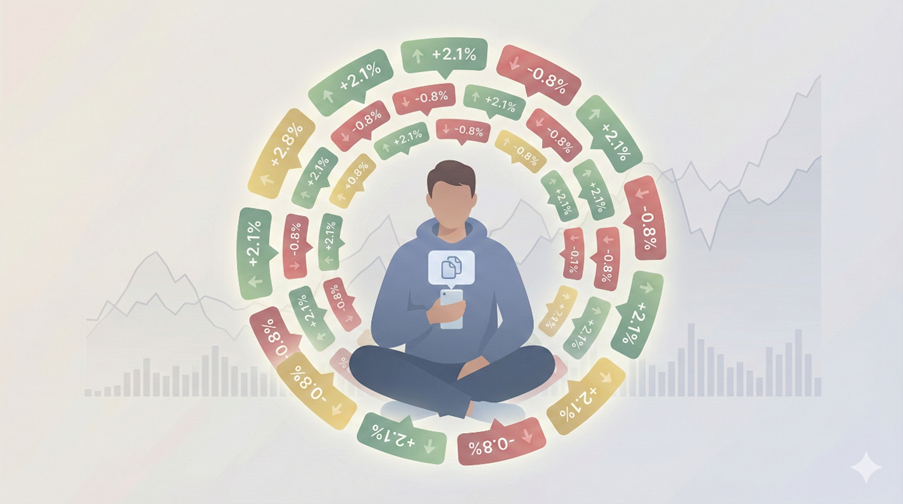
Why it feels safer than it is
Copy trading sells relief.
A retail investor is not looking for complexity. They are looking for a way to reduce uncertainty. Copying looks like a shortcut to confidence because it replaces a hard question with an easier one. The hard question is: “What do I believe, and what is my plan if I am wrong?”
The easy question is: “Who looks like they know what they are doing?”
Then the internet adds social proof. Follower counts become credibility. A short streak of returns becomes a reputation badge. Profit screenshots become a substitute for audited performance. A group full of people saying “booked” becomes a substitute for understanding.
This is not stupidity. This is a normal human response to uncertainty. Markets, unfortunately, are the one place where normal human shortcuts get punished most reliably.
What you are really copying
Most people think they are copying an entry. They are copying an operating system. When you copy a trader, you copy:
- Their risk model (how much they risk per trade and per day)
- Their leverage (explicit or hidden through options sizing)
- Their timing (entries and exits, which is often the whole edge)
- Their pain tolerance (how long they can sit through drawdowns)
This is why two people can take the “same trade” and still get different outcomes.
The leader exits at the moment they decide. The follower exits after seeing the message, placing the order, and absorbing whatever liquidity is left after thousands of similar orders hit the market. Even if the leader is genuine, followers pay a cost that never shows up in screenshots: delays, slippage, and execution gaps.
The market problem that copying creates
Markets work best when decisions are distributed. Different people buy for different reasons, hold for different horizons, and sell based on different constraints. That diversity is part of what keeps markets stable.
Copy trading compresses that diversity into one repeated decision. It clusters entries. It clusters stop-losses. It clusters exits. It synchronises panic.
This is why copying can look brilliant in smooth markets and break badly in stress. A strategy that works with 50 followers can fail with 50,000 followers, because the trade becomes too crowded to enter cleanly and too crowded to exit safely. Popularity does not reduce risk in markets. Popularity concentrates risk.
How it shows up in India, in real terms
In India, a lot of copy trading sits inside “tips” ecosystems.
SEBI has already taken enforcement actions related to Telegram-based stock recommendations. In one interim order, SEBI described complaints and patterns involving recommendations shared via a Telegram channel, including how entities allegedly took positions first and then pushed messages to induce buying interest.
This matters because it draws a clean line between two realities that retail investors often confuse:
- Sometimes it is a fraud funnel (reels → group → fake app → deposits → blocked withdrawals).
- Sometimes it is a market misconduct funnel (group influence used to move prices or create unfair gains).
- And sometimes it is “only” mirroring behaviour with no scam, where the hidden risk is crowding, slippage, and the follower’s weaker risk control.
All three can destroy capital. They destroy it through different mechanisms.
If you want a modern example of how tips and influence can blend into market abuse, Reuters reported SEBI’s action involving alleged stock promotion via TV and Telegram channels and subsequent selling for profit, with unlawful gains impounded in the interim order.
The point is not the personalities. The point is the structure. The retail investor is reacting to a feed. The market is reacting to a crowd. That combination is combustible.
The proof that short-horizon behaviour is expensive
Copy trading is one expression of a larger problem: short-horizon behaviour has grown, and retail outcomes in short-horizon segments have been brutally one-sided.
SEBI’s updated study on equity F&O reported that 93% of individual traders incurred losses between FY22 and FY24, with aggregate losses exceeding ₹1.8 lakh crore over three years.
Media coverage of SEBI’s analysis also highlighted how widespread the damage is at an individual level, reporting average losses around ₹2 lakh per losing trader over the period, based on the same dataset. Even after curbs, the pattern has continued. Reuters reported SEBI findings for FY25 showing retail net losses in equity derivatives rising further (reported as up 41% to ₹1.06 trillion).
This is not “proof” that every fast trade is bad. It is proof that when participation becomes high-frequency, confidence-led, and crowd-driven, the aggregate outcome for retail turns consistently negative. Copy trading plugs directly into that same behavioural wiring.
What SEBI and platforms are doing about it
A useful way to measure how serious a problem is, is to watch what regulators and platforms do when they are forced to respond.
SEBI’s May 21, 2025 caution note (PR No. 27/2025) is a direct acknowledgment of the scale of social-media-driven securities fraud and impersonation, and it tells investors to deal only with genuine handles of SEBI-registered entities. You can find all SEBI registered here: https://www.sebi.gov.in/sebiweb/other/OtherAction.do?doRecognised=yes
SEBI has also tightened rules around “association” risk. The circular dated October 22, 2024 (Circular No. SEBI/HO/MIRSD/MIRSD-PoD-1/P/CIR/2024/143) is part of the broader attempt to reduce the ecosystem that enables prohibited activities to sit near regulated entities.
Platforms are moving too, because they sit at the top of the funnel. Meta announced verification and transparency requirements for advertisers running securities and investments ads targeting users in India, including the need to verify the beneficiary and payer for such ads.
None of this means the problem disappears. It means the problem has become large enough that the system is trying to contain it.
A practical India example: how a follower loses even when the leader “wins”
Assume a Telegram group has 20,000 people. At 9:18 AM, the “leader” posts: “Buy Nifty50 option at 120, SL 105, target 150.”
The first few hundred followers get filled near 120 because liquidity is still decent. Within a minute, the same order flow hits the market from thousands of accounts and the option jumps to 132. Now a large chunk of the group enters at 130–135 even though the posted entry was 120.
The leader exits at 150, books a clean screenshot, and posts “target achieved.” Many followers never see 150. They experience the exit wave differently. Once the leader sells, and once early followers start selling, spreads widen and price snaps down faster than people expect. Followers who entered late exit at 135–140. A good call on paper becomes a mediocre trade in real life because followers paid the delay tax on entry and the crowding tax on exit.
This is the core structural problem with copy trading: the more popular the trader becomes, the less copyable their execution becomes.

How to protect yourself
This is not only a finance problem. It is an attention problem first. If your inputs are designed to trigger urgency, your outputs will be reactive. So, protection needs to be behavioural and practical.
1) Verify before you trust
If someone claims legitimacy, verify it through official channels, not screenshots.
2) Treat profit screenshots as marketing
A screenshot shows one moment. It does not show drawdowns, leverage, position sizing, or the trades that were deleted from the story.
3) Never let a group set your time horizon
If your decision horizon is minutes, you are trading. If your risk control is weak, you are donating. Be honest about which game you are playing.
4) Use the market’s own reporting rails
If you receive unsolicited stock tips or suspicious “recommendations,” NSE provides a way to report them (including a phone number and email for reporting).
5) Separate learning from execution
If someone is teaching, the idea should survive a 24-hour delay. If it cannot, it is usually not education. It is stimulus designed to trigger action.
Closing
Copy trading sells the feeling that you can skip the slow part of the markets. The slow part is the whole point.
Independent thought is not a philosophical luxury in investing. It is a risk tool. When you outsource thinking to a crowd, you inherit the crowd’s leverage, timing, and panic, whether you realise it or not.
If you copy your favourite social trader, you also copy their risk model, leverage, and timing. Trade accordingly.